Cosmetic Issues We Can Fix With Dental Veneers
July 24, 2026 9:00 amSome smile concerns are small, but they have a way of grabbing your attention every time you look in the mirror. A chipped front tooth. A darker tooth that does not match the others. Uneven edges that make the smile look a little jagged. A gap that always shows up in photos, no matter how naturally you try to smile.
Dental veneers can help with several of those cosmetic issues. Veneers are thin shells that cover the front surface of teeth to change their color, shape, size, or overall appearance. They are often used on front teeth because those are the teeth people notice most when you smile, talk, or laugh.
However, veneers are not a cover-up for every dental problem. The teeth and gums need to be healthy enough first. If there is decay, gum disease, a cracked tooth, or bite pressure that could damage the veneers, Dr. Serrano may recommend treating those concerns before planning cosmetic changes.
At Alma Dental Care in Petaluma, CA, Dr. Serrano can look at what is bothering you, evaluate the health of the teeth underneath, and explain whether veneers are a good fit or whether another option would make more sense.
Chipped Front Teeth
A small chip on a front tooth can be hard to stop noticing. It may have happened years ago from a fall, a sports injury, biting into something hard, or accidentally hitting a glass against the tooth. Even when the tooth does not hurt, the uneven edge can make the smile look unfinished.
Veneers can cover chips and help restore a smoother tooth shape. Instead of only patching the missing corner, a veneer covers the front of the tooth and can be shaped to blend with the teeth around it.
This can be especially helpful when the chip is visible in photos or when the tooth has other cosmetic concerns too, such as discoloration or an uneven shape. For a very small chip, bonding may be enough. However, if the tooth needs a more complete cosmetic change, a veneer may give a cleaner and more lasting result.
Dr. Serrano will also want to know why the chip happened. If the tooth chipped because of grinding, clenching, or a bite issue, that pressure needs to be considered. Otherwise, the same force that damaged the natural tooth could damage the veneer later.
Deep Stains That Do Not Respond to Whitening
Some stains sit on the surface of the teeth and respond well to whitening. Others are deeper within the enamel or dentin and do not brighten evenly, even after professional whitening.
This can happen from certain medications, old trauma to a tooth, enamel differences, aging, or past dental work. As a result, one tooth may look darker than the rest, or several teeth may have discoloration that does not lift the way someone hoped.
Veneers can cover deep stains by creating a new visible surface for the tooth. The shade can be chosen to look brighter while still blending with the rest of the smile. That balance is important because teeth that are too white for the face or surrounding teeth can stand out in a way most people do not want.
Sometimes whitening is part of the plan before veneers. For example, if only a few teeth are getting veneers, Dr. Serrano may discuss whether the surrounding natural teeth should be whitened first so the final shade can be matched more easily. Once veneers are placed, their color will not change with whitening.
Uneven Tooth Edges
Tooth edges can become uneven for many reasons. Some teeth naturally come in with slightly different lengths. Others become worn from grinding, clenching, nail biting, or years of normal use. Over time, a small chip here and a worn edge there can make the smile look less even than it used to.
Veneers can help create a smoother line across the front teeth. The shape and length of each veneer can be planned so the smile looks balanced rather than flat or overly uniform.
That planning takes more than making every tooth the same length. Natural teeth have small differences in shape and proportion. The front two teeth often look slightly different from the side teeth, and those details help the smile look natural.
Dr. Serrano can look at the edges of the teeth, the way the lips frame the smile, and the bite before recommending veneers. If the unevenness is caused by grinding, a nightguard may also be discussed to help protect the finished result.
Small Gaps Between Teeth
Small gaps between front teeth can be a good fit for veneers when the spacing is mild and the bite is healthy. Veneers can be designed slightly wider to close or reduce the appearance of the space.
This can work well when the gap is mostly a cosmetic concern and the teeth do not need major movement. For example, a small space between the front teeth or slight spacing near the side teeth may be improved with veneers.
However, larger gaps or several spacing issues may need orthodontic treatment instead. If veneers are made too wide just to close a large space, the teeth can start to look bulky or unnatural. Because of that, careful planning is a big part of getting a result that looks like it belongs in your smile.
Dr. Serrano can help determine whether veneers, bonding, clear aligners, or another option would create the best result. Sometimes moving the teeth first creates a better foundation before any cosmetic treatment is planned.
Teeth That Look Too Small or Narrow
Some people feel their teeth look small compared to their smile, lips, or face. Others have teeth that are naturally narrow, short, or slightly underdeveloped. Because of that, the smile may look less full, or small spaces may show between teeth.
Veneers can change the visible shape and size of teeth. They can make selected teeth look slightly wider, longer, or more proportional, depending on the case.
Even a small change in length or width can shift the way the whole smile looks. A little more length on worn front teeth or a fuller shape on narrow side teeth can help the teeth look better matched without making the smile look artificial.
The gums also affect how tooth size looks. If the gums cover more of the teeth than expected, gum contouring or another treatment may be part of the conversation before veneers. Dr. Serrano can look at the full smile and explain what is creating the appearance of small teeth.
Mildly Crooked or Uneven-Looking Teeth
Veneers can sometimes improve the look of teeth that appear mildly crooked, tilted, or uneven. They do this by changing the visible front surface of the teeth rather than moving the roots into a new position.
This may be a good option when the issue is minor and the teeth are otherwise healthy. A tooth that sits slightly back, has an uneven edge, or looks different from its neighbor may be made to blend better with veneers.
However, veneers are not a replacement for orthodontic treatment when teeth are significantly crowded or the bite is off. If teeth are too far out of position, covering them with veneers can require too much tooth preparation or create a result that looks thick.
For some patients, clear aligners or braces may be recommended first. Then, once the teeth are in a better position, veneers may still be used to refine color, shape, or worn edges.
Worn Teeth From Grinding or Clenching
Grinding and clenching can flatten the edges of the teeth over time. The smile may look shorter, older, or more square than it used to. Some people also notice small chips, rough edges, or teeth that seem to fit together differently.
Veneers can restore the look of worn front teeth in some cases. They can rebuild length, improve shape, and make the smile look more even.
Before veneers are placed, Dr. Serrano will need to evaluate the bite. If grinding continues without protection, veneers can chip, crack, or loosen. A custom nightguard may be recommended to protect the veneers and natural teeth while you sleep.
Severe wear may require a larger treatment plan. Sometimes crowns or other restorations are more appropriate if the tooth structure is too damaged. The right choice depends on how much enamel remains, how the teeth meet, and how much force the front teeth take.
Old Bonding That No Longer Matches
Dental bonding can be a great option for small chips or gaps, but it can stain or wear over time. A bonded front tooth may start looking dull, rough, or different from the surrounding teeth.
If bonding has been repaired several times, a veneer may provide a cleaner and more stable cosmetic result. Veneers are more resistant to staining than bonding and can be designed to match the surrounding teeth more closely.
This can be helpful when an old repair is on a front tooth that shows often. Instead of adding more bonding to an area that keeps chipping or discoloring, a veneer may cover the front of the tooth and create a more even appearance.
Dr. Serrano can check how much bonding is present, whether the tooth underneath is healthy, and whether a veneer would have enough tooth structure to bond properly.
Teeth With Shape Differences
Not every tooth naturally comes in with the shape people want. Some teeth are pointier, shorter, narrower, or more rounded than the teeth around them. Lateral incisors, which sit next to the two front teeth, are a common example. They may be smaller or shaped differently, which can make the smile look uneven.
Veneers can reshape those teeth so they blend better with the rest of the smile. The aim is not to make every tooth identical. Instead, the veneer should help the tooth fit in with the surrounding teeth more naturally.
Shape changes can be especially helpful when one or two teeth stand out from the rest. A veneer can adjust the visible width, length, and contour of the tooth so it fits the smile more comfortably.
Dr. Serrano can also compare veneers with bonding for smaller shape changes. Bonding may be enough for minor tweaks, while veneers may be better when the tooth needs a broader change in shape or color.
What Veneers Cannot Fix
Veneers can improve many cosmetic concerns, but they are not the right fix for every dental issue. If a tooth has a large cavity, a deep crack, or very little healthy structure left, a crown may be a better option.
If the gums are inflamed, bleeding, or affected by gum disease, that needs to be treated before veneers are placed. Healthy gums help the veneers look better and last longer.
Veneers also cannot correct major bite problems. If teeth are crowded, rotated, or positioned in a way that affects chewing, orthodontic treatment may be recommended before cosmetic work.
The same is true for active grinding. Veneers may still be possible, but the bite and grinding habit need to be managed. Otherwise, the new veneers may take the same force that damaged the natural teeth.
Planning Veneers Around Your Smile
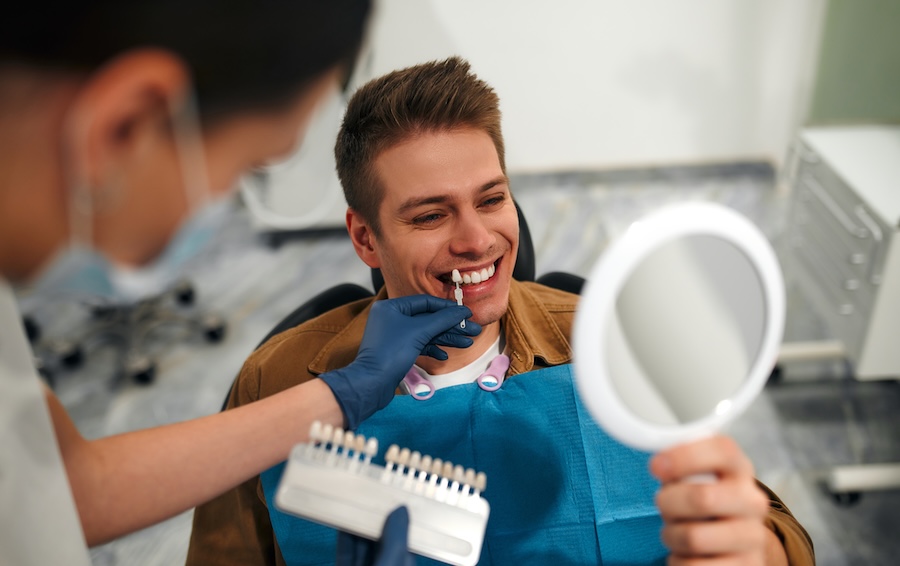
A veneer consultation is not only about pointing to one tooth and picking a whiter shade. Dr. Serrano will look at tooth shape, gumline, lip movement, bite, facial features, and the surrounding teeth.
Photos can be helpful if you have a certain look in mind. Maybe you like a smile that looks brighter but still natural. Maybe you want softer edges instead of teeth that look too square. Or maybe you already know you do not want anything that looks overly white or too uniform.
The number of veneers can vary. Some people only need one veneer to repair a tooth that stands out. Others may need several veneers to create a more balanced look across the front teeth.
The best plan depends on what you want to change, how your teeth fit together, and whether veneers are the most conservative way to reach that result.
Dental Veneers at Alma Dental Care in Petaluma, CA
Dental veneers can help improve chipped teeth, deep stains, uneven edges, small gaps, narrow teeth, mild crookedness, worn enamel, old bonding, and tooth shape concerns. They work best when the teeth and gums are healthy, the bite is stable, and the plan is built around your natural smile.
At Alma Dental Care in Petaluma, CA, Dr. Serrano can evaluate your teeth, talk through what you would like to change, and explain whether veneers or another cosmetic option would be the best fit. Call Alma Dental Care to schedule a veneer consultation and take the next step toward a smile that feels more like you!
Contact UsCategorised in: Cosmetic Dentistry, Veneers