Dental Crowns vs. Tooth-Colored Fillings: Which Option Is Best?
October 9, 2026 9:00 amA tooth can behave itself for years before an old filling starts feeling rough, a corner chips, or something suddenly feels different when you bite. Sometimes you notice it while flossing. Sometimes it is one bite of something crunchy at dinner, and suddenly that tooth has your full attention.
When that happens, you may wonder whether another filling will do the job or whether the tooth needs a crown. At Alma Dental Care in Petaluma, Dr. Maria Serrano provides both tooth-colored fillings and dental crowns, including same-day CEREC crowns for many patients. We look at how much of the tooth is still healthy, how much has already been repaired, and how much chewing force that tooth handles before recommending one over the other.
Dental Crowns vs. Tooth-Colored Fillings
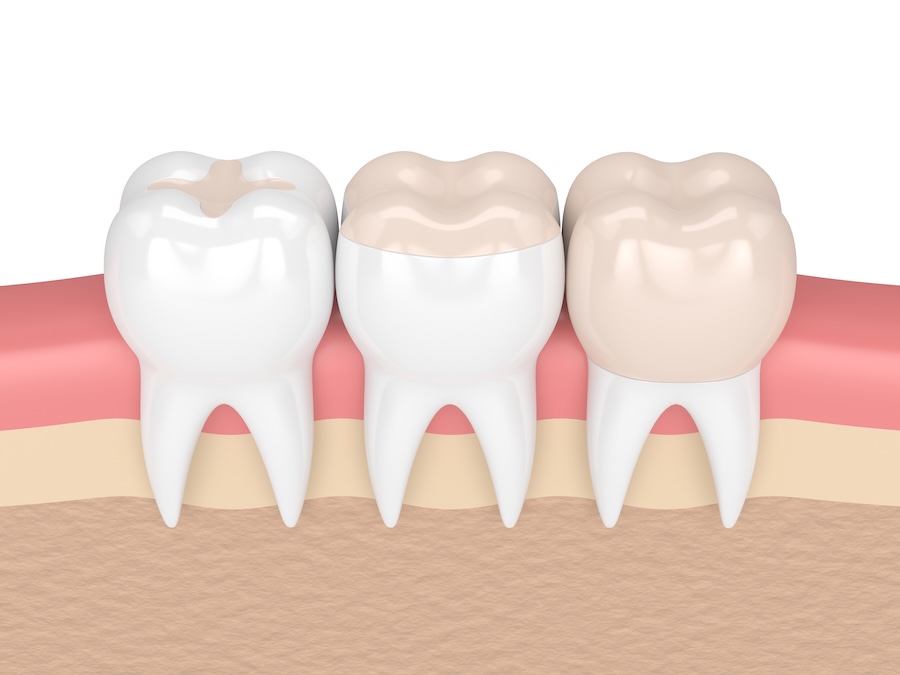
A tooth-colored filling repairs one part of the tooth. We remove the decay or damaged material, then rebuild that area with composite resin that bonds directly to the tooth and blends with the surrounding enamel. When the rest of the tooth is still solid, a filling can be a very conservative way to restore it.
A crown covers much more of the tooth, so we usually look in that direction when the remaining walls are thinner, cracked, or already supporting a large restoration. Think about a back tooth with a big silver or tooth-colored filling in the middle and only narrow strips of natural tooth left around the edges. Those outer walls are still taking the force every time you chew, and eventually one may chip or split.
So the question is less about whether crowns are “better” than fillings and more about what that particular tooth can comfortably support. One tooth may only need a small bonded repair. Another may have already lost enough structure that wrapping it with a crown gives it a better chance of holding up.
When a Filling May Be Enough
If the cavity or damaged area is limited and there is plenty of healthy tooth around it, a filling may be all you need. After Dr. Serrano removes the decay or old material, we can rebuild the missing area without covering the whole tooth. That keeps the repair focused on the part that actually needs attention.
A small cavity along the side of a tooth is very different from a filling that stretches across most of a molar. Back teeth do a lot of heavy chewing, so the wider the repair becomes, the more pressure those remaining edges have to carry. If the enamel around the filling is still thick and well supported, that may be perfectly fine.
The history of the tooth can also give us some clues. A tooth with one small filling and lots of untouched enamel is in a different position than one that has been filled, refilled, and repaired again over the years. Sometimes there is enough healthy structure left for another filling, and sometimes the tooth is starting to look a little too patched together for that to be the best long-term repair.
When a Crown May Offer More Protection
A crown often comes up when the tooth has a large filling, a broken cusp, or a crack running through part of the chewing surface. At that point, the remaining enamel may be thin enough that it flexes under pressure. You may not feel that happening, but over time those weaker areas can chip or split.
A crown covers the tooth and helps hold those remaining walls together. That can be especially helpful on molars, where the forces from chewing, clenching, and grinding are much higher. If you have ever cracked a piece off a heavily filled back tooth, you have seen how quickly a tooth can go from “fine yesterday” to suddenly needing attention.
Cracks can be tricky because what you see on the surface is not always the whole story. Some are shallow and stay within one part of the tooth, while others travel farther down. Dr. Serrano will check the tooth, your bite, and the surrounding structure to see whether a crown can protect it or whether another kind of treatment makes more sense.
A tooth that has had a root canal can also end up needing more coverage, particularly in the back of the mouth. Those teeth often already have a large filling or access opening, and they still have to handle the same chewing pressure as before. A crown can help reinforce what is left and reduce the chance of a fracture later on.
What About Same-Day Crowns?
At Alma Dental Care, we offer CEREC same-day crowns for many cases. Instead of taking a traditional impression, placing a temporary crown, and sending everything to a lab, we can scan the tooth digitally and design the restoration here in the office. Our milling system then creates the crown while you are still here.
For many patients, that means the tooth can be prepared and restored in one visit. You do not have to spend a couple of weeks trying not to chew on a temporary crown or come back for a second appointment just to have the final crown seated. Once the crown is ready, we check the fit, contacts, and bite before cementing it in place.
Some teeth may still be better suited to a different type of restoration or material. If CEREC works well for your tooth, we will explain how the appointment will go before we get started. The technology gives us another option, but the tooth still decides what kind of repair makes the most sense.
How Cost and Longevity Compare
A crown usually costs more than a filling because it covers more of the tooth and takes more time and material to create. If a smaller filling can restore the tooth reliably, there is no reason to jump straight to a crown. On the other hand, a very large filling in a weakened tooth can end up being a short-term fix if one of those remaining walls later breaks.
That is why we look beyond the size of the cavity itself. We want to know how much natural tooth is left around it, whether there are cracks, how large the existing filling is, and what that tooth is being asked to do every day. A molar that takes the brunt of your bite may need a different approach than a smaller tooth with a limited repair.
Both fillings and crowns can last for years, but they still live in a mouth that chews, clenches, grinds, drinks coffee, and occasionally bites down on something harder than expected. The edges can wear, and the natural tooth around a restoration can still develop decay. Brushing, cleaning between the teeth, and wearing a nightguard when recommended can help both the restoration and the tooth around it last longer.
Restorative Dentistry in Petaluma, California
If an old filling has started catching your tongue, a piece of tooth has chipped off, or one side feels different every time you chew, we can take a look and see what is going on. Sometimes the repair is still small enough for a tooth-colored filling. Other times, the tooth has reached the point where a crown gives it the support it needs.
At Alma Dental Care in Petaluma, Dr. Maria Serrano can show you the damaged area and walk you through the options for that specific tooth. If something feels rough, cracked, sore, or just different than it used to, schedule a visit with our team and let us help you get it taken care of before your next meal turns it into a bigger problem!
Contact UsCategorised in: Dental Fillings, Restorative Dentistry, Same-Day Dental Crowns