
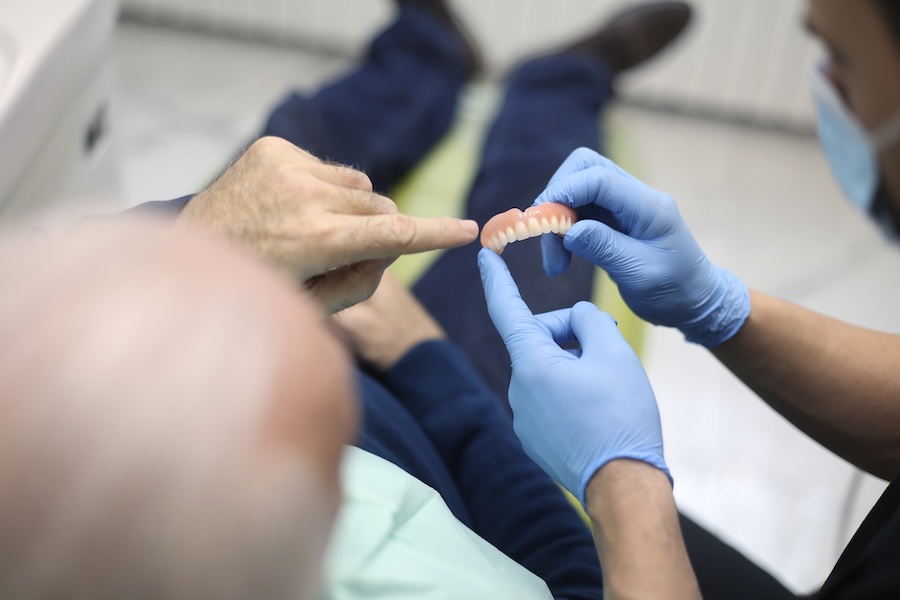
Signs It’s Time to Replace or Adjust Your Dentures
October 16, 2026 9:00 amDentures are made to help you eat, speak, and get through the day without thinking about them very much. Over time, though, the fit can change enough that an adjustment, reline, repair, or replacement may be needed. You may start using more adhesive, chewing more carefully, or catching the lower denture with your tongue when you talk.
At Alma Dental Care in Petaluma, Dr. Maria Serrano can evaluate the dentures along with your gums, bite, and any natural teeth that are still present. Sometimes a small adjustment is enough to make things comfortable again. In other cases, the denture has worn down or the shape of your mouth has changed enough that a reline or replacement makes more sense.
Your Dentures Move More Than They Used To
A denture that fit well when it was made can loosen over time because the gums and bone underneath it keep changing after tooth loss. As the ridge gradually shrinks, more space can develop between the denture and the tissue supporting it. You may notice rocking when you chew, lifting when you yawn, or movement while you are talking.
At first, it may be easy to compensate with adhesive. However, if you keep adding more just to get through lunch or dinner, the fit itself may have changed. Adhesive can help with stability, but it should not have to make up for a denture that no longer sits closely against the gums.
Lower dentures can be more prone to movement because they have less surface area to rest on. If slipping has become a regular part of eating or speaking, bring the denture in so we can see how it is fitting now. From there, we can decide whether an adjustment, reline, or another option would help.
Sore Spots Keep Coming Back
A sore spot often starts as one small area you notice with your tongue. Then it gets rubbed again at breakfast, lunch, and dinner, and by the end of the day you may be ready to take the denture out early. When the same place keeps getting irritated, we need to look at both the denture and the tissue underneath it.
Sometimes one edge is putting too much pressure on the gums and can be adjusted. In other cases, the denture is moving enough to create friction in more than one area. We check where the soreness is showing up and how the denture sits when you bite down.
If the area stays sore even after the denture has been out for a while, Dr. Serrano can examine the tissue itself and make sure there is not another oral problem involved. Continued irritation is something we would rather address before it becomes harder to wear the denture comfortably. Bringing the denture with you also helps us match the sore area to the spot that may be causing it.
Chewing Has Become More Work
You may gradually start changing what you eat because some foods take more effort than they used to. Tougher meats get cut into smaller pieces, raw vegetables may be skipped, and softer foods start showing up more often because they are easier to manage. After a while, that can just feel like your normal way of eating.
Meanwhile, the denture teeth can wear down. As those surfaces flatten, the upper and lower teeth may stop meeting as evenly, which can make chewing less efficient and allow the denture to shift more. You may also notice that one side is doing more of the work than the other.
When that starts happening, we can check the bite, the amount of wear, and how much the denture moves while you chew. Sometimes a small adjustment improves the way the teeth come together. If the denture is older and the teeth are heavily worn, replacement may give you a better result.
The Denture Has Cracked, Chipped, or Broken
A small crack in the base can turn into a much bigger break if you keep chewing on it. The same goes for a missing denture tooth, a bent clasp, or a partial that suddenly feels different around the natural teeth. Even if you can still get the appliance in and out, the damage can change how pressure is distributed when you bite.
If you still have any broken pieces, bring them with you. We can see whether the denture can be repaired and also check whether the break came from wear, an accidental drop, or an uneven fit. Sometimes the break itself points us toward a fit problem that has been building for a while.
Avoid household glue or trying to reshape the denture yourself. Those changes can make the pieces harder to fit back together and can interfere with a professional repair. If a partial no longer slides into place the way it used to, do not force it around the remaining teeth.
Sometimes the Answer Is an Adjustment, Sometimes a Reline
An adjustment is usually focused on one specific area. If an edge is rubbing or one spot is taking too much pressure, we may be able to smooth or reshape that part of the denture. That can work well when the rest of the fit is still good.
A reline changes the surface that rests against your gums. If the ridge underneath the denture has changed but the denture itself is still in good condition, a reline can help the base sit more closely against the tissue again. That can reduce rocking and help the denture feel more secure.
There are also times when the denture has simply worn down too much to keep adjusting. Dentures often last around 5 to 10 years, although daily wear, changes in your mouth, and how the appliance is cared for can shorten or extend that range. If the teeth are worn flat, the base is damaged, or the bite has changed quite a bit, a new denture may give us more to work with than another adjustment to the old one.
Your Bite Can Change Along With the Fit
A denture can stay in place and still start meeting differently when you close your teeth together. You may notice that the front teeth touch first, one side hits harder, or chewing feels less balanced than it used to. Over time, that uneven contact can also make certain areas of the gums sore.
As denture teeth wear down, the way the upper and lower teeth meet gradually changes too. The surfaces that once lined up well may become flatter, so the denture shifts more during chewing. We can check those contact points and see whether the bite can be adjusted or whether the amount of wear calls for replacement.
Regular exams help us catch those changes before they become more frustrating. You may have adapted to the new bite little by little without realizing how different it feels from when the denture was first made. Seeing the denture in place lets us compare how it is functioning now.
Full and Implant-Supported Dentures Need Different Checks
We offer both full dentures and implant-supported dentures, and each type can change differently over time. A traditional full denture rests on the gums, so changes in the ridge underneath can affect how closely it sits. An implant-supported denture gets added stability from dental implants, but the attachment points and surrounding tissues still need regular care.
If you wear an implant-supported denture, let us know if it starts snapping in differently, feels loose around an attachment, or does not seat the way it used to. Small changes around those connection points can affect the way the whole appliance feels. We can check the denture, the attachments, and the implants supporting it.
With either type, repeated slipping, rubbing, or extra adhesive is a reason to have the fit checked. If you are holding the denture in place with your tongue or avoiding one side when you chew, mention that when you come in. Those little adjustments you make during the day can tell us a lot about where the fit has started to change.
Keep Bringing Your Dentures to Dental Visits
Even with a full denture, there is still plenty for us to check. We examine the gums and other oral tissues, look for sore or irritated areas, and check how the denture is wearing. If you have a partial, we also keep a close eye on the natural teeth supporting it.
Bring the appliance with you even if you have stopped wearing it comfortably. Seeing how it sits against your gums gives us much more information than trying to describe the fit from memory. If you have been using more adhesive, chewing on one side, or taking the denture out earlier in the day, mention that too.
Regular visits also give us a chance to catch gradual changes before they turn into a broken base or a very sore mouth. Dentures do a lot of work every day, and the tissues underneath them continue to change. A little maintenance along the way can help keep the fit more comfortable for longer.
Denture Care in Petaluma, California
If your dentures have started slipping, rubbing, clicking, or changing the way you eat, bring them in and let us see what is going on. Also, if you are a caregiver for a loved one with dentures, Dr. Maria Serrano can check the fit, the bite, and the condition of the denture and explain whether an adjustment, reline, repair, or replacement is the best next step. If you are interested in more stability, we can also talk with you about implant-supported dentures.
Schedule a visit with Alma Dental Care in Petaluma and bring your dentures with you. We would love to help you get back to eating, talking, and smiling without having to keep adjusting around the denture all day!
Contact UsCategorised in: Dentures