
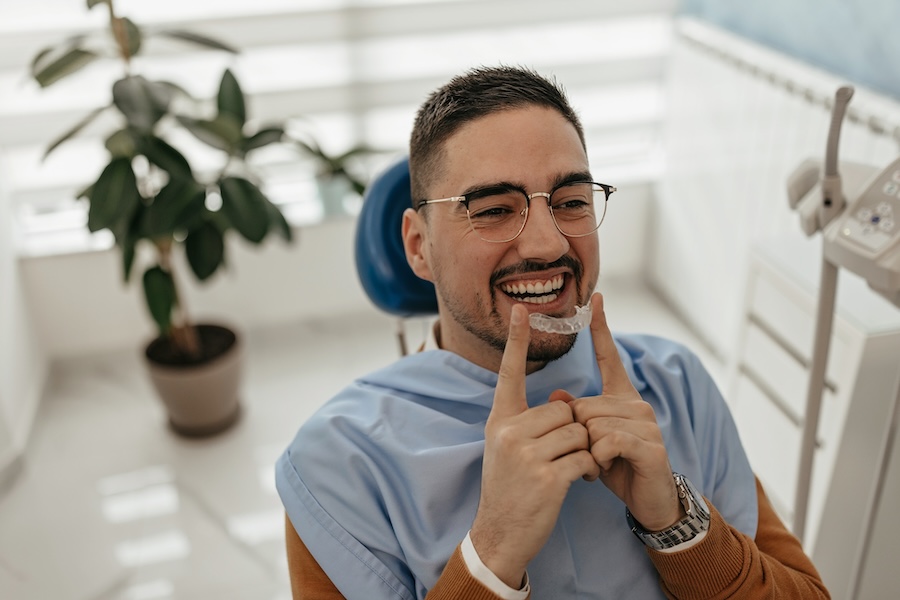
Does Invisalign Help With Bruxism?
January 23, 2026 9:00 amBruxism, also known as teeth grinding or clenching, is a common concern among dental patients. It can lead to jaw pain, flattened teeth, enamel wear, headaches, and other long-term damage if left untreated. Many patients seeking orthodontic care often wonder: Can Invisalign help with bruxism?
The answer is yes, it can help in some cases—but with a few important clarifications. Invisalign may reduce certain bite-related triggers of grinding, but it is not designed as a treatment for bruxism itself. At Alma Dental Care in Petaluma, Dr. Serrano works closely with patients to evaluate when Invisalign might offer relief and when additional steps, like post-treatment protection, are necessary.
Understanding What Causes Bruxism
Bruxism occurs when a person unconsciously clenches or grinds their teeth, often during sleep. It can be triggered by stress, bite alignment issues, sleep disorders, or even medications. Over time, the constant force can damage tooth enamel, stress the jaw joint (TMJ), and lead to discomfort or broken restorations.
Because it often happens at night, patients may not notice the behavior until symptoms appear. These include jaw tightness in the morning, worn biting surfaces, increased tooth sensitivity, or a partner hearing grinding during sleep.
How Invisalign Can Help
Invisalign is primarily an orthodontic treatment used to correct misaligned teeth, bite issues, and spacing concerns. However, improving the alignment of your bite can reduce the uneven forces that sometimes contribute to bruxism.
When teeth are crowded, rotated, or bite together in a stressful way, the jaw has to compensate. This imbalance can make grinding worse. Straightening the teeth and creating a more harmonious bite may relieve some of that strain, which in turn can lessen the intensity of clenching or grinding for certain patients.
Invisalign and Nightguards: What’s the Real Difference?
Invisalign aligners and nightguards serve very different purposes. Invisalign’s goal is to gently move teeth into better alignment. Nightguards are designed to protect your teeth from the repetitive stress and force of grinding.
That said, some patients do report that wearing Invisalign trays at night provides a mild cushioning effect between the upper and lower teeth, which can ease TMJ tension or reduce pressure points. While not intended for this use, the trays may offer limited protection during sleep—though they are not built to absorb grinding forces long-term.
For patients with moderate to severe bruxism, Invisalign trays are not a substitute for a properly fitted nightguard. However, traditional hard nightguards are not compatible with Invisalign treatment, since your teeth are shifting position throughout. Once your treatment is complete and your teeth have stabilized, a custom nightguard can be made to protect your new smile for the long term.
When Invisalign May Be a Good Fit for Bruxism Patients
Bite irregularities: Invisalign can address bites that concentrate force on specific teeth.
Crossbites or open bites: Correcting these can reduce jaw strain.
Crowding: Aligning crowded teeth allows for more even pressure distribution across the bite.
By improving alignment, Invisalign can help the teeth and jaw work more efficiently together—often reducing one of the mechanical factors behind bruxism. Still, it’s not the whole answer, and most patients benefit from a combined approach over time.
How Dr. Serrano Approaches Bruxism at Alma Dental Care
At Alma Dental Care in Petaluma, Dr. Serrano takes a comprehensive, customized approach to bruxism. During your visit, he’ll evaluate your bite, check for wear or jaw strain, and discuss your symptoms. If Invisalign is appropriate, he’ll walk you through how it fits into your treatment plan—whether as a first step or as part of a follow-up to other care.
For many patients, orthodontic treatment comes first, followed by a custom nightguard to preserve the results and protect the teeth moving forward. Others may benefit from using temporary guards first and returning to alignment work once symptoms are under control. Every plan is based on your goals, symptoms, and long-term dental health.
Does Invisalign Help With Bruxism – Answers From Alma Dental Care in Petaluma
So, does Invisalign help with bruxism? In many cases, yes—but not in isolation. Invisalign can improve your bite and reduce the mechanical stress that contributes to grinding, but it does not eliminate bruxism or replace the need for protection in patients who clench or grind regularly.
If you’re experiencing jaw discomfort, worn enamel, or other signs of bruxism, schedule a consultation at Alma Dental Care in Petaluma. Dr. Serrano will assess your bite, walk you through your options, and help you determine whether Invisalign can play a role in your long-term plan for a healthier, more comfortable smile.
Contact UsCategorised in: Bruxism, Invisalign, TMD (TMJ Disorders)